Manuals
Large Boat Mooring
Explanation of symbols
Important information is labelled with the following symbols:

1 Summary with an overview of the component and key points related to escape protection
1.1 General definitions
| Aquaculture farm | Installation for the farming of fish. |
| Basin dimensions | The pen’s inner circumference. |
| Design working life | Assumed period for which a structure or part of it is to be used for its intended purpose with anticipated maintenance but without major repair being necessary. |
| Operation | Fish farming at site, including all installation and operation activities performed at the site while fish farming is in progress, and that are of relevance to the escape prevention of fish. |
| Extra equipment | Equipment that is not a main component. |
| Inspection | Systematic inspection/examination, usually visual, to ensure that the equipment satisfies the requirements. |
| Pen | Structure whose main function is to provide an enclosure with buoyancy and/or stiffness. |
| Anchoring system | System of lines and bottom attachments with the main function of keeping the aquaculture farm or raft in position. |
| Bridles | Anchoring line between the floater and the anchoring system. |
| Main component | Part of an aquaculture farm that holds one or more of the installation’s load bearing main functions. Example: Floater, anchoring system, raft and enclosure. |
| Enclosure | Net or other system of load bearing parts that form a barrier between the farming volume in a production unit and the surrounding water volume. |
| Bracket | Component keeping the inner and outer floating collar pipes together. |
| Weight | Weight or other device attached to the net to achieve the intended shape. Centre weight is attached beneath the bottom centre of the net-cone. |
| Cage | Floater with enclosure. |
| NS9415:2021 | Standard which sets out functional requirements for floating aquaculture farms and will be fundamental for stakeholders in the aquaculture industry, such as authorities, supervisory bodies, designers, suppliers, actors within R&D and manufacturers, as well as aquaculture farm owners. |
| NYTEK23 regulation | Governing Regulation for Fish Farming in Norway. |
| Circumference | Inner length of the inner floating collar. |
| Product certificate | Document confirming that the product is produced in accordance with requirements in NYTEK23 and NS9415:2021. |
| Large boat mooring | ScaleAQ rope solution designed for mooring larger boats to pens. |
| Suspension system | Weights, sinker tube or similar used to keep the three-dimensional shape of the net. |
1.2 Introduction
ScaleAQ has been supplying pens for aquaculture for over 40 years. With a long history of incidents and extensive experience in the use of pens, we have developed “Large boat mooring” as a recommended solution for mooring larger boats to ScaleAQ pens.
The large boat mooring is designed to transfer the load from the mooring lug ears and mooring brackets to the knee supports in the standard brackets. This will help to avoid unnecessary wear and incidents on the mooring brackets, as well as maintain the service life of the pens.
2 Description of the components of the large boat mooring system
The large boat mooring system has the following components:
- One 18 mm Aquaneema rope.
- Two rope shackles.
3 Interface with other components
The large boat mooring system is attached to the pen and to the boat as shown in chapter 4. Ropes in the large boat mooring are protected with an outer sheath/fire hose to avoid chafing and wear on ropes or adjacent boat anchorage.
The large boat mooring must not be attached to mooring brackets.
4 Mounting and installation of the unit
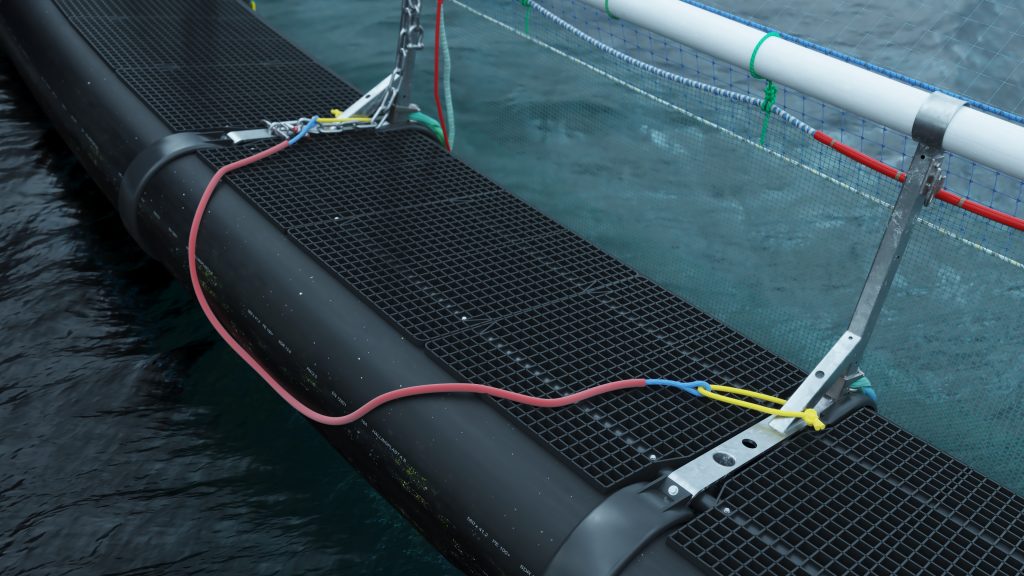
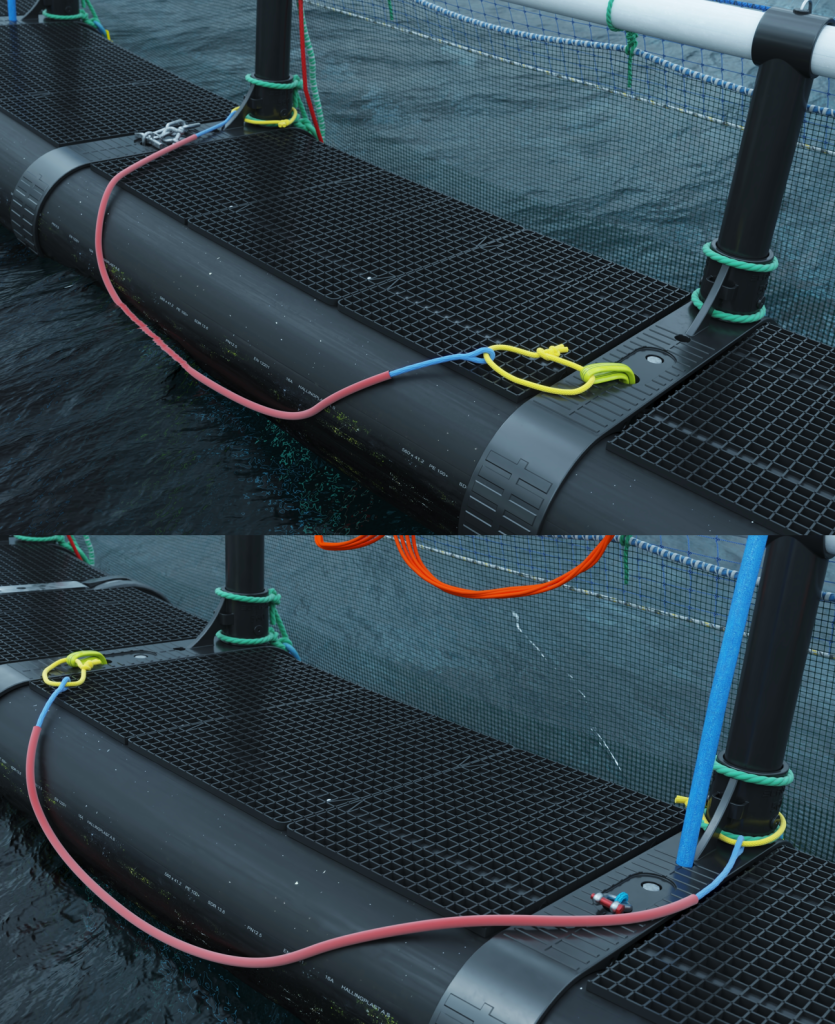
The large boat mooring system is easily installed on the pen using rope shackles. Between the rope shackles, 18 mm Aquaneema is spliced in, which is distributing the loads and torque on the two standard brackets as shown in Figure 4.1 and 4.2, regardless of the approach angle from the boat.
On pens with steel brackets, the rope shackles must be attached and secured to the inclined support as shown in Figure 4.1. Ensure that rope shackles have sufficient locking.
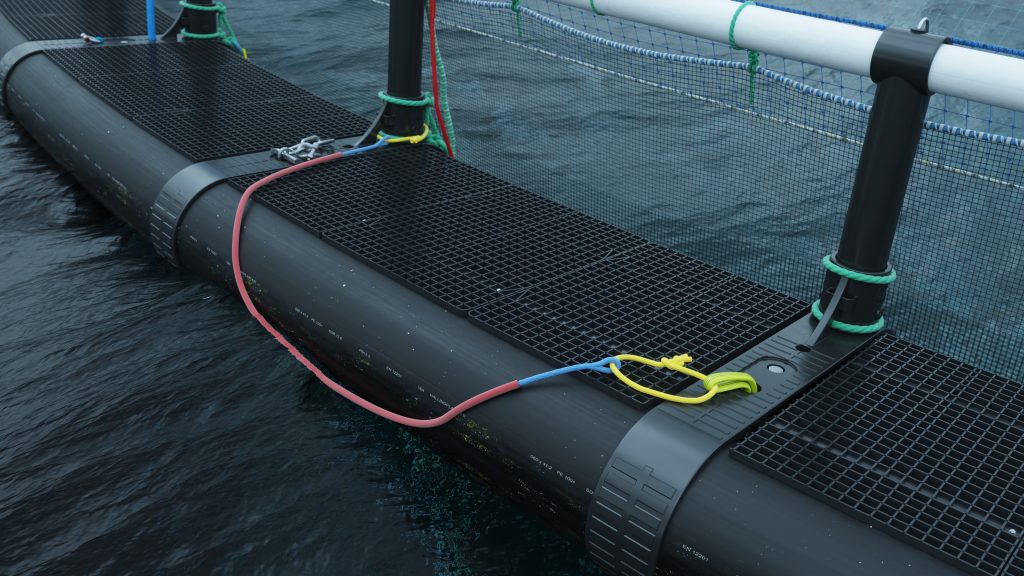
For pens with plastic brackets, there are two alternative methods of attachment:
- Rope shackle fastened in round sling in the downpipe on plastic brackets (recommended).
- Rope shackle fastened around handrail post root in plastic brackets.
A combination of this is also approved, see Figure 4.2.
Note that the rope shackle must not be attached to the inclined support of a plastic bracket, or be loaded in such a way that the large boat mooring exerts pressure on the inclined support at the handrail post.
5 Use
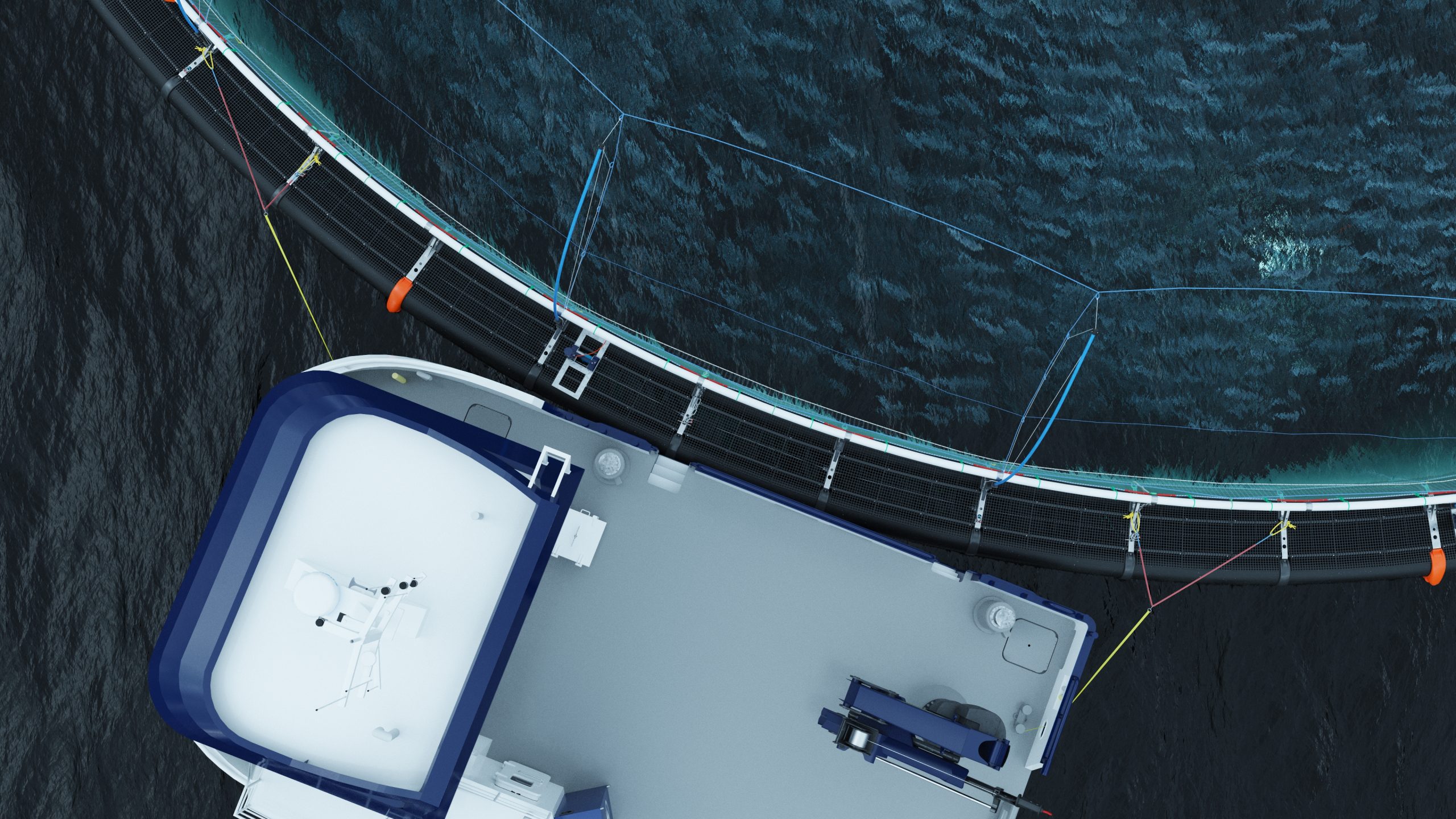
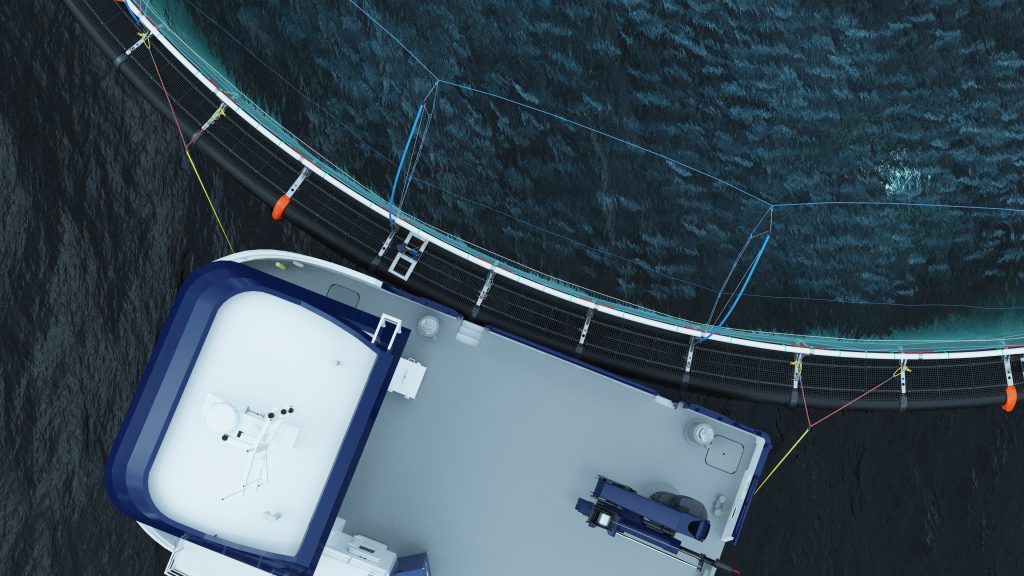
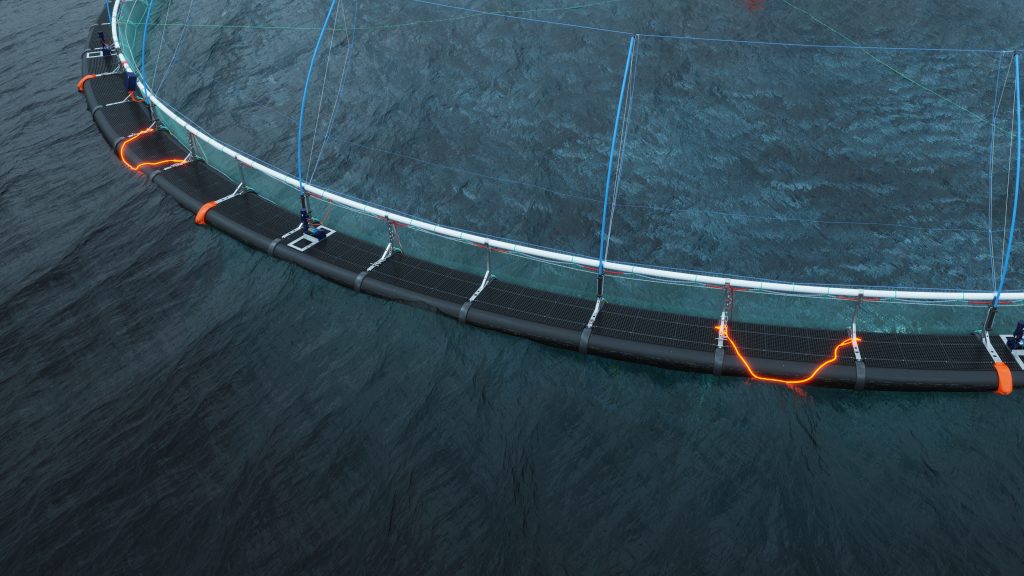
See example in Figure 1.1 for how large boat mooring is used.
If the weather condition is good and the sea is calm, two large boat moorings can be used. It is recommended to use more large boat moorings if necessary and if the weather condition is bad. The number of moorings is adapted to the attachment point on the boat and what the weather requires.
Ensure that the mooring from the boat is attached to the large boat mooring where there is a jacket/fire hose. This is important to avoid wear, tear and chafing.
Large boat mooring is distributed on the floating collar where it is most relevant to dock with a large boat or well boat as shown in Figure 5.1.
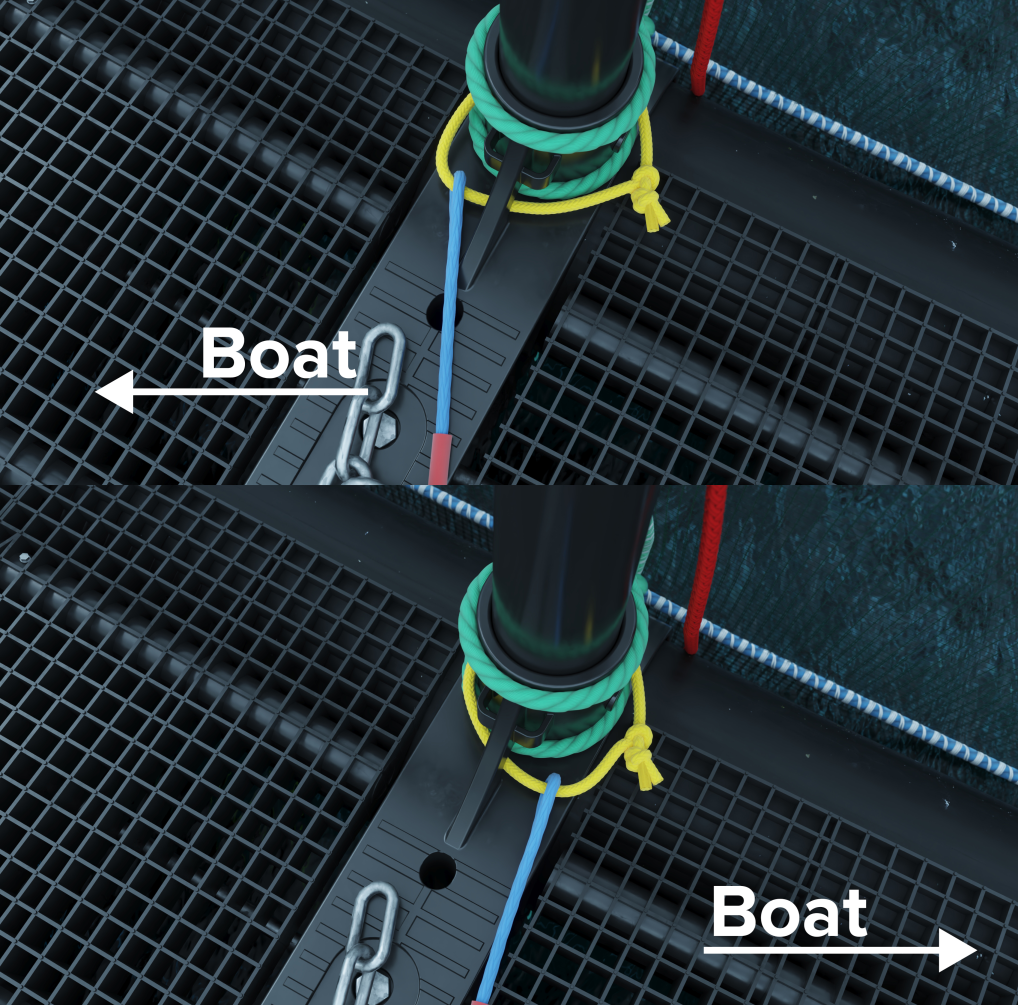
When using large boat mooring on plastic brackets and where you need to attach a rope shackle to the handrail post root, ensure that the rope shackle is positioned in the correct direction relative to the boat. This is to prevent loading on the inclined support, see Figure 5.2 and 5.3.
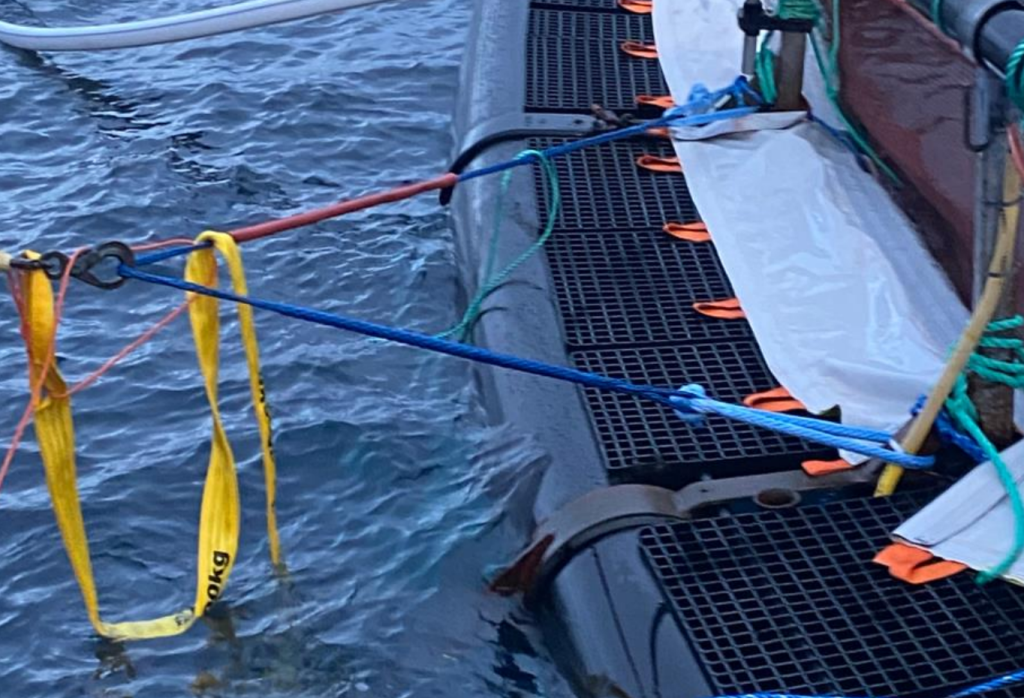
Large boat moorings should NOT be used in mooring brackets shown in Figure 5.4.
5.1 Breaking strength
Rope shackles and ropes in large boat mooring are made of 18mm HMPE with a breaking strength of approximately 31 tonnes.
6 Inspection and maintenance
Ensure that the ropes and rope shackles in the large boat mooring are intact and undamaged before use. In the event of a breakage in one or more strands, the rope shackle or rope must be replaced.
7 Transport and storage
When the large boat mooring is not in use, ensure that it is stored in such a way that it is not damaged or can cause damage to other components.
8 Manufacturer and product identification
| HEAD OFFICE | |
| Scale Aquaculture AS | Phone: +47 488 52 488 (choose 2 for service) |
| Beddingen 16 | E-mail: post@scaleaq.com |
| 7042 Trondheim | www.scaleaq.com |
8 Revision history
| Auditing | Changes | Date |
|---|---|---|
| 1 | First revision user manual | 29.10.2025 |